Are APA research papers double spaced? This seemingly simple question unlocks a world of formatting rules designed to enhance readability and ensure academic consistency. APA style, beloved and sometimes bemoaned by students and scholars alike, hinges on precision. Double spacing isn’t merely a suggestion; it’s a foundational element that shapes the entire document, impacting everything from the title page to the reference list.
Understanding this requirement is the first step toward crafting a polished, professional paper that meets the exacting standards of APA formatting.
This guide will delve into the intricacies of double spacing in APA research papers. We’ll explore where it’s mandatory, how to ensure correct implementation across various sections, and the rationale behind this crucial formatting choice. From the mechanics of setting double spacing in your word processor to navigating exceptions and avoiding common pitfalls, we’ll equip you with the knowledge to format your paper with confidence.
Get ready to master the art of the double space and transform your research into a visually appealing and easily navigable document.
Identifying Double Spacing in Different Paper Sections

Ensuring correct double spacing is a fundamental requirement of APA style, and it applies consistently across various sections of your research paper. This formatting detail significantly impacts readability and adherence to the guidelines. Verification and consistent application of these spacing rules are essential for a professional and compliant academic document.
Verifying Double Spacing in the Main Body
Accurately verifying double spacing in the main body of an APA paper requires careful attention to detail. This section focuses on methods for confirming proper spacing and addresses common pitfalls.To confirm double spacing, use the following steps:
- Check Paragraph Spacing: The primary method involves inspecting the spacing between lines within each paragraph. The most common method is to select all text (Ctrl+A or Cmd+A), then navigate to the paragraph settings in your word processing software (e.g., Microsoft Word, Google Docs). In the spacing options, the “Line spacing” setting should be set to “Double.” Verify that the spacing before and after paragraphs is set to “0 pt” to prevent additional, unintended space.
- Visual Inspection: After applying the double spacing, visually scan the document. Pay close attention to any areas where the spacing appears inconsistent or cramped. Compare the spacing in various parts of the body to ensure uniformity.
- Use the Ruler: Use the ruler to measure the spacing between lines, particularly in areas where you suspect issues.
- Print Preview: Utilize the print preview function. This will give a final check, helping identify any spacing errors before submission.
Spacing Requirements for Headings and Subheadings
Headings and subheadings play a critical role in organizing an APA paper, and their spacing requirements are equally crucial. Correctly formatted headings enhance readability and provide a clear structure for the reader.The following are the specific spacing guidelines for headings and subheadings:
- Spacing Before: The spacing
-before* a heading or subheading should typically match the spacing between the lines of text in the body of the paper (double-spaced). - Spacing After: The spacing
-after* a heading or subheading should also be double-spaced, as it separates the heading from the text that follows. - Heading Levels: The different levels of headings (Level 1, Level 2, etc.) each have specific formatting requirements for style (e.g., centered, flush left, etc.) and should be followed to maintain consistency. The spacing rules apply to all heading levels.
Double-Spacing Rules for Block Quotes
Block quotes are used for longer quotations and have distinct formatting requirements. Correct formatting ensures these quotes are clearly distinguished from the main body text and meet APA standards.The key double-spacing rules for block quotes are:
- Indentation: Block quotes are indented one-half inch from the left margin. This indentation is the primary visual cue that a quote is a block quote.
- Spacing: The entire block quote is double-spaced, just like the rest of the paper. This applies to the text within the quote itself.
- Spacing Before and After: The block quote should have a double-spaced line before and after it to clearly separate it from the surrounding text.
- No Quotation Marks: Do not use quotation marks around the block quote; the indentation serves as the indicator.
For instance, consider the following block quote:
“The rapid advancements in technology have profoundly impacted the way we communicate, learn, and interact with the world. These changes are reshaping social structures and individual behaviors at an unprecedented rate.”
APA research papers typically require double-spacing throughout the document. Considering the academic calendar, you might be planning your schedule around events like Palm Sunday, which in 2025 falls on palm sunday 2025 , a significant date for many. Therefore, remembering the double-spacing rule is essential when preparing your APA formatted research paper to ensure it meets the required standards.
The above quote is a block quote that illustrates the application of these rules. The quote should be double-spaced throughout, indented one-half inch from the left margin, and set off from the surrounding text by a double-spaced line before and after.
Variations and Exceptions in Double Spacing

Adhering to the standard double-spacing format is a cornerstone of APA Style. However, understanding the nuances of spacing, including when to deviate from the norm, is crucial for accurate academic writing. This section clarifies the distinctions between double and single spacing and identifies permissible exceptions within an APA paper.
Yes, APA research papers typically require double-spacing throughout the document. However, understanding different formatting styles is crucial; for instance, the guidelines in the mla handbook for writers of research papers offer distinct formatting instructions. While MLA might have different spacing conventions, remember that for your APA papers, double-spacing remains a fundamental requirement to ensure readability and adhere to the established formatting standards.
Comparing Double and Single Spacing, Are apa research papers double spaced
The primary difference lies in the vertical space between lines of text. Double spacing, the standard for the majority of an APA paper, provides ample space for reviewers to offer comments and for readability. Single spacing, conversely, places lines of text closer together. While double spacing is the default, single spacing is employed strategically in specific sections to maintain formatting consistency and clarity.
- Double Spacing: This format applies to the entire paper, including the title page, abstract, main text, block quotations, references, footnotes, and appendices. Double spacing enhances readability and allows for editorial markups.
- Single Spacing: Single spacing is typically used within specific elements, such as:
- Footnotes: When used, footnotes are single-spaced, with double spacing between each footnote. This distinction helps to visually separate footnotes from the main text while maintaining clarity.
- Tables and Figures: Text within tables and figures may be single-spaced to optimize space, but consistent spacing should be maintained within the table or figure itself.
- Appendices: Similar to tables and figures, text within appendices may be single-spaced. However, double spacing should still separate each appendix item or section.
Exceptions and Special Circumstances
While the double-spacing rule is generally unwavering, certain situations might warrant minor deviations, always ensuring clarity and adherence to the spirit of APA style.
- Tables and Figures: As mentioned earlier, while the overall paper is double-spaced, the content
-within* tables and figures can often be single-spaced to optimize the use of space. This is a practical exception, not a violation, of the spacing rule. - Long Quotations in Tables/Figures: If a long quotation is included within a table or figure, single-spacing the quotation while maintaining double spacing between the quotation and other elements in the table/figure might be acceptable, but ensure readability.
- Accessibility Considerations: In rare cases, for individuals with visual impairments, a slightly wider spacing than the standard double spacing might be permissible to enhance readability, if explicitly requested or advised by accessibility guidelines. This should be clearly indicated in the paper.
Example of a Block Quotation
Block quotations, quotations exceeding 40 words, are a specific formatting requirement in APA style. They are always double-spaced and indented.
Yes, APA research papers are indeed double-spaced to improve readability. However, the emergence of AI tools like ChatGPT is transforming the research landscape. Exploring the potential chatgpt effects on research papers is crucial for understanding these changes. Despite these advancements, the fundamental formatting principles of APA style, including double-spacing, remain essential for clarity and academic integrity within your research papers.
The concept of cognitive dissonance, as Festinger (1957) originally proposed, centers on the psychological discomfort experienced when holding conflicting beliefs or engaging in behaviors inconsistent with one’s beliefs. This discomfort motivates individuals to reduce the dissonance through various strategies, such as changing their beliefs, changing their behavior, or adding new cognitions to justify the inconsistency.
The core of the theory lies in the drive to maintain internal consistency.
In this example, the block quotation is double-spaced throughout, including the citation. The indentation visually distinguishes it from the main text. This demonstrates the correct application of the double-spacing rule within a specific APA formatting element.
Ending Remarks: Are Apa Research Papers Double Spaced
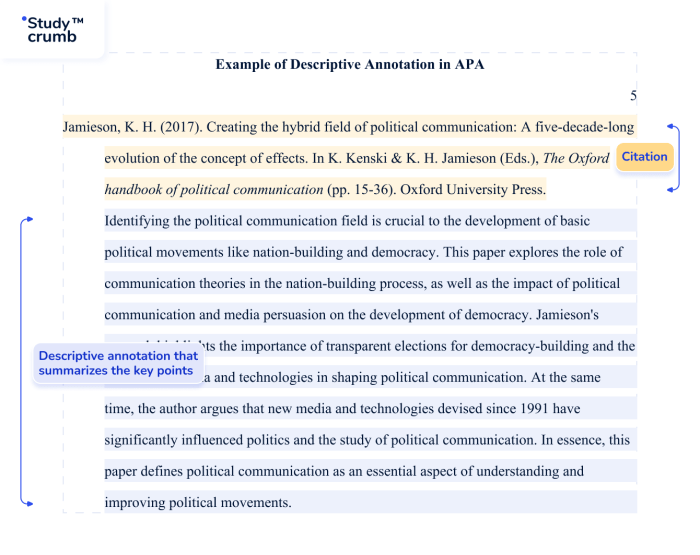
In conclusion, the consistent application of double spacing is paramount in APA research papers. It’s more than just an aesthetic choice; it’s a fundamental aspect of clear communication and adherence to academic standards. From the title page to the reference list, mastering double spacing is essential for creating a polished and professional document. By understanding the rules, utilizing the tools, and avoiding common errors, you can ensure your research meets the exacting standards of APA style.
Embrace the double space, and watch your research shine.
Common Queries
Why is double spacing used in APA papers?
Double spacing enhances readability, making it easier for reviewers and readers to process the information. It also provides space for instructors and editors to add comments.
Do I double-space everything in my APA paper?
Yes, the general rule is to double-space the entire paper, including the abstract, body, and references. However, there may be specific exceptions like footnotes or long block quotes, which should follow the APA guidelines.
How do I set double spacing in Microsoft Word?
Select your text, go to the “Home” tab, and click the line spacing icon (usually found in the “Paragraph” section). Choose “2.0” for double spacing.
What is the difference between line spacing and paragraph spacing?
Line spacing refers to the space between lines of text within a paragraph, while paragraph spacing refers to the space between paragraphs. In APA style, both are often set to double spacing, but be sure to avoid extra spaces between paragraphs.
Where can I find the official APA guidelines?
The official guidelines are found in the Publication Manual of the American Psychological Association. Always refer to the latest edition for the most up-to-date information.


