With example of rhythm in poetry at the forefront, this exploration delves into the captivating world of poetic expression. Rhythm, a powerful tool in the hands of poets, breathes life into words, shaping meaning and evoking emotion. From the subtle shifts in tempo to the deliberate patterns of meter, this journey uncovers the intricate relationship between rhythm and the overall impact of a poem.
Discover how poets utilize rhythmic devices, and how these choices affect the reader’s experience, leading to a profound connection with the text.
This presentation examines the fundamental aspects of rhythm in poetry, including defining rhythm, identifying key rhythmic devices, analyzing specific examples, and exploring the interplay between rhythm and poetic form. It will also illuminate how rhythm conveys deeper meanings and shapes the reader’s emotional response.
Defining Rhythm in Poetry

Rhythm in poetry is the patterned recurrence of stresses and pauses in a line of verse. It’s a crucial element that contributes significantly to the poem’s musicality and emotional impact. Understanding rhythm allows readers to appreciate the subtle variations in the poem’s pace and the overall effect on the reader’s experience. A skilled poet uses rhythm to evoke a specific mood or feeling, drawing the reader into the poem’s world.Poetic rhythm is not simply a matter of speed, but a complex interplay of sound and structure.
It encompasses both the measured beats of meter and the ebb and flow of tempo, working in tandem to create a powerful and engaging reading experience. This interplay of elements distinguishes poetry from prose, lending it a unique quality.
Components of Poetic Rhythm
Rhythm in poetry comprises several crucial components that contribute to its overall effect. Meter, the systematic arrangement of stressed and unstressed syllables, provides the framework for rhythm. Tempo, the speed and pace of the rhythm, further enhances the poem’s effect, creating a sense of urgency, calmness, or excitement.
Meter
Meter is the regular pattern of stressed and unstressed syllables in a line of verse. It’s a fundamental aspect of poetic rhythm, providing a framework for the poem’s structure and sound. Different meters create different rhythmic effects. The rhythmic effect of a poem depends on the pattern of stressed and unstressed syllables in each line. The pattern of stressed and unstressed syllables is referred to as the meter.
Tempo
Tempo refers to the speed or pace of the rhythm in a poem. A fast tempo can create a sense of urgency or excitement, while a slow tempo can evoke a sense of calm or introspection. Tempo is closely tied to the meter and the poet’s intended effect. The rhythmic flow of a poem depends on how the tempo is maintained and adjusted.
Rhythm vs. Rhyme
Rhythm and rhyme are distinct poetic elements. Rhythm is the patterned recurrence of stresses and pauses in a line of verse, while rhyme is the repetition of similar sounds at the end of lines. While they can work together, they are not the same. Rhythm creates a musicality that is inherent in the structure, while rhyme is an added element that enhances the sound but doesn’t define the rhythm.
For example, a poem can have a consistent rhythm without any rhyme, or it can rhyme without adhering to a strict rhythm.
Examples of Rhythmic Patterns in Different Poetic Forms
Various poetic forms exhibit distinct rhythmic patterns. Sonnets, for example, often employ iambic pentameter, a rhythm characterized by five pairs of unstressed and stressed syllables per line. Haikus, on the other hand, employ a syllabic pattern of 5-7-5, which influences their rhythmic flow. Free verse poetry, with its lack of strict meter, relies on other rhythmic devices such as repetition and assonance to create a sense of rhythm.
Table of Poetic Meters
| Meter | Description | Example |
|---|---|---|
| Iambic Pentameter | Five iambs (unstressed-stressed) per line | Shall I compare thee to a summer’s day? |
| Trochaic Tetrameter | Four trochees (stressed-unstressed) per line | Hark! Hark! The lark at break of day. |
| Spondaic Dimeter | Two spondees (stressed-stressed) per line | Full fathom five thy father lies. |
| Anapestic Trimeter | Three anapests (unstressed-unstressed-stressed) per line | And the maiden walked with her maidenly grace. |
Identifying Rhythmic Devices: Example Of Rhythm In Poetry

Rhythm in poetry, much like music, creates a sense of flow and structure, enhancing the poem’s impact. Understanding the rhythmic devices employed by poets is crucial for appreciating the nuances of their craft. These devices, often based on patterns of stressed and unstressed syllables, shape the auditory experience and contribute significantly to the overall meaning and emotion conveyed.Identifying and analyzing these devices allows readers to delve deeper into the poetic text, noticing how the poet manipulates sound and form to create a specific effect.
Common Rhythmic Devices
Understanding the fundamental building blocks of poetic rhythm is key to appreciating the variety and complexity of rhythmic patterns. Various rhythmic devices are employed by poets to create specific effects and convey meaning.
- Iamb: This rhythmic pattern consists of an unstressed syllable followed by a stressed syllable (˘ /). Its common and natural flow makes it suitable for everyday speech, often lending a conversational or conversational tone to poetry.
- Trochee: Conversely, a trochee features a stressed syllable followed by an unstressed syllable (/ ˘). The emphasis on the first syllable can create a more forceful or dramatic effect.
- Spondee: A spondee is a pair of stressed syllables (/ /). Its powerful and emphatic nature is often used to highlight significant words or ideas, adding weight and intensity to the poem.
- Anapest: This rhythmic pattern comprises two unstressed syllables followed by a stressed syllable (˘ ˘ /). The unexpected stress at the end often lends a sense of movement and momentum to the line.
- Dactyl: A dactyl consists of a stressed syllable followed by two unstressed syllables (/ ˘ ˘). The emphasis on the first syllable can create a sense of grandeur or swiftness, depending on the context.
Significance of Rhythmic Patterns
The rhythmic patterns in poetry are not merely aesthetic choices; they play a vital role in conveying meaning and emotion. The specific rhythm chosen by a poet can emphasize certain words, create a sense of mood, and evoke particular feelings in the reader.
- Emotional Impact: The rhythmic patterns in a poem can significantly impact the reader’s emotional response. A fast-paced rhythm might evoke excitement, while a slow, deliberate rhythm can induce a sense of melancholy or contemplation. The specific rhythm used helps shape the overall tone of the poem.
- Meaning and Emphasis: The placement of stressed and unstressed syllables within a rhythmic pattern can highlight specific words or phrases, thus altering their importance and meaning within the context of the poem. A carefully chosen rhythm can direct the reader’s attention to specific ideas or images, making them more memorable and impactful.
Examples of Rhythmic Devices in Poetry
Exploring examples of poems utilizing various rhythmic devices will provide a practical understanding of their application.
- Example 1 (Iambic Pentameter): Shakespeare’s sonnets often employ iambic pentameter, creating a smooth and flowing rhythm. The pattern of five iambs per line gives a natural, conversational feel, yet retains a formal elegance.
- Example 2 (Trochaic Tetrameter): A poem using trochaic tetrameter (four trochees per line) might create a more forceful and energetic effect. The consistent stress on the first syllable of each foot can add a sense of urgency or drive.
Table Comparing and Contrasting Rhythmic Devices
This table provides a summary of the effects of various rhythmic devices, highlighting their contrasting characteristics.
| Device | Syllable Pattern | Effect | Example |
|---|---|---|---|
| Iamb | ˘ / | Conversational, natural | “Shall I compare thee to a summer’s day?” |
| Trochee | / ˘ | Forceful, dramatic | “Hark, hark, the lark at break of day.” |
| Spondee | / / | Emphatic, intense | “O’er the fields of barley green” |
| Anapest | ˘ ˘ / | Movement, momentum | “The Assyrian came down like the wolf on the fold.” |
| Dactyl | / ˘ ˘ | Grand, swift | “Now fades the glimmering landscape on the sight.” |
Rhythm and Poetic Form

Rhythm is not merely a stylistic choice in poetry; it’s a fundamental component interwoven with the very structure of poetic form. Understanding this connection reveals how poets manipulate rhythmic patterns to create specific effects, enhance meaning, and achieve a sense of unity within their poems. Different poetic forms, with their unique structures, demand specific rhythmic patterns, thereby influencing the poet’s choices and the reader’s experience.Poetic forms prescribe certain structures that dictate the arrangement of lines, stanzas, and rhyme schemes.
These structures, in turn, shape the rhythmic possibilities of the poem. The relationship between rhythm and form is symbiotic; the form provides the framework, and the rhythm fills it with life and meaning. By adhering to or deviating from established rhythmic patterns, poets can create specific moods, emphasize certain themes, and engage the reader in a unique way.
Influence of Poetic Forms on Rhythm
Different poetic forms, such as sonnets, villanelles, and sestinas, have inherent rhythmic expectations. The structure of the form dictates the rhythmic patterns that are most effective and appropriate. For example, a sonnet’s fourteen lines, with its specific rhyme scheme and often iambic pentameter, requires a careful orchestration of rhythm to achieve the desired effect.
Relationship Between Rhythmic Patterns and Poetic Form Structure
The rhythmic patterns employed in a poem are intrinsically linked to its structural elements. The length of lines, the arrangement of stanzas, and the rhyme scheme all influence the rhythmic flow. In a sonnet, the consistent iambic pentameter rhythm throughout the 14 lines creates a sense of regularity and order, while the specific rhyme scheme adds another layer of rhythmic complexity.
Villanelles, with their repeating lines and refrains, establish a rhythmic framework that contrasts with the sonnet’s consistent pattern, focusing on repetition and variation.
Manipulation of Rhythm for Unity and Coherence
Poets skillfully manipulate rhythm to create a sense of unity and coherence within a specific poetic form. They may use internal rhyme, alliteration, assonance, or other sound devices to enhance the rhythmic flow and create a musicality that reinforces the poem’s overall meaning. By employing consistent rhythmic patterns, poets achieve a sense of cohesion and structure that guides the reader through the poem.
Table of Typical Rhythmic Patterns in Poetic Forms
| Poetic Form | Typical Rhythmic Pattern | Example |
|---|---|---|
| Sonnet (Shakespearean) | Iambic pentameter, ABAB CDCD EFEF GG rhyme scheme | Shall I compare thee to a summer’s day? Thou art more lovely and more temperate: Rough winds do shake the darling buds of May, And summer’s lease hath all too short a date: … |
| Villanelle | Five-line stanzas, repeating two lines, alternating rhyme scheme | Do not go gentle into that good night, Old age should burn and rave at close of day; Rage, rage against the dying of the light. Though wise men at their end know dark is right, Because their words had forked no lightning they, Do not go gentle into that good night. … |
| Sestina | Six-line stanzas, repeating six end words in a specific pattern across the poem | (Example would require a full sestina poem to be truly illustrative, but the pattern of repeating words is the key rhythmic feature.) |
| Free Verse | Variable rhythm, no fixed meter or rhyme scheme | (Examples of free verse would require a poem to illustrate the variable rhythm, but the absence of a rigid structure is a key rhythmic element.) |
Illustrative Examples of Rhythm

Rhythm in poetry is not merely a matter of sound; it’s a vital element that shapes the poem’s overall impact. It dictates the pacing, influences the emotional response, and contributes significantly to the poem’s aesthetic appeal. Understanding how rhythm works in practice is crucial for appreciating the nuances of poetic expression.Rhythm, in poetry, is the patterned recurrence of stressed and unstressed syllables.
This pattern, when skillfully employed, can create a sense of musicality, a powerful emotional connection, and a distinct voice for the poet. The effect of rhythm is often subtle, yet profoundly influential in shaping the reader’s experience.
Examples of Iambic Pentameter
Iambic pentameter, a common rhythmic pattern in English poetry, is characterized by a sequence of unstressed, stressed syllables, repeated five times in a line. This pattern creates a natural, conversational flow, often mimicking the rhythm of everyday speech. The consistent rhythm, while predictable, allows the poet to highlight the emotional content of the poem through variations in tone, pauses, and imagery.
“Shall I compare thee to a summer’s day?Thou art more lovely and more temperate.”
The rhythm in Shakespeare’s famous sonnet creates a sense of measured reflection. The consistent iambic pentameter underscores the poet’s thoughtful contemplation of the subject. The flow is smooth and deliberate, emphasizing the comparison being made. The imagery evoked is one of beauty and permanence. The pacing is deliberate, allowing the reader to fully absorb the meaning and emotional weight of each line.
Examples of Free Verse, Example of rhythm in poetry
Free verse, in contrast to fixed forms like iambic pentameter, abandons regular rhythmic patterns. This allows poets to create a more improvisational, conversational, and even jarring effect. The absence of a rigid rhythm can emphasize specific words or phrases, create a sense of urgency or spontaneity, and often highlight the speaker’s emotional state.
“The road not taken.”
Robert Frost’s poem, famous for its lack of rhythmic regularity, creates a sense of ambiguity and choice. The absence of a fixed pattern allows the reader to engage with the poem on a more personal level. The rhythmic variations emphasize the significance of the decision described in the poem, making it both impactful and thought-provoking. The pacing is more unpredictable, reflecting the uncertainty and introspection of the poem’s central idea.
Examples of Spondaic Rhythm
Spondaic rhythm, characterized by the repetition of stressed syllables, creates a strong, forceful, and often dramatic effect. The relentless emphasis of each syllable can convey a sense of urgency, tension, or even anger. The pacing is generally swift and energetic.
“The wild, wild winds that blow.”
The repetition of stressed syllables in this example emphasizes the forcefulness of the wind. The rhythmic pattern creates a strong sense of motion and power, mirroring the powerful imagery of the wind’s effect. The pacing is rapid, matching the sense of the wind’s relentless movement.
Impact of Rhythm on Readers

Rhythm in poetry isn’t merely a technical element; it’s a powerful tool that deeply influences the reader’s experience. It shapes not only the auditory experience but also the emotional and intellectual engagement with the text. The interplay of stressed and unstressed syllables, the repetition of patterns, and the overall flow of the poem create a dynamic that can evoke a wide spectrum of responses.
This impact extends beyond simple pleasure, shaping how we understand and interpret the poem’s message.The rhythmic patterns in a poem are carefully constructed to create a specific effect on the reader. This meticulous crafting guides the reader’s emotional response, influencing their understanding of the poem’s meaning and its impact on their overall experience. The way the poem moves and feels directly affects the reader’s ability to connect with its message and internalize its themes.
Emotional Impact of Rhythmic Patterns
Rhythm, by its very nature, is a powerful emotional tool. Different rhythmic patterns can evoke a wide range of feelings, from joy and excitement to sadness and contemplation. A fast-paced, irregular rhythm might convey a sense of urgency or chaos, while a slow, steady rhythm could evoke feelings of serenity or introspection. The choice of rhythm is often deliberate, directly influencing the reader’s emotional journey through the poem.
Mood Creation through Rhythm
Rhythm plays a crucial role in setting the mood of a poem. The interplay of sounds and stresses creates an atmosphere that complements the poem’s theme. A poem employing a light, bouncy rhythm will likely evoke a cheerful or playful mood, while one with a somber, measured rhythm might create a feeling of melancholy or contemplation. The subtle variations in rhythm can create nuances in mood, allowing for a richer and more nuanced reading experience.
Influence on Understanding and Interpretation
The rhythmic structure of a poem can significantly impact how the reader understands and interprets its content. The patterns and stresses within the lines can highlight key words or phrases, emphasizing their importance and meaning within the context of the poem. By carefully structuring the rhythm, the poet can guide the reader’s attention to specific aspects of the poem, potentially altering their understanding and interpretation of the poem’s message.
The rhythmic pulse of poetry echoes the very essence of existence, a subtle beat resonating within the soul. Imagine the harmonious flow of words, like waves upon a shore, creating a symphony of meaning. This profound rhythm, found in masterful examples, can now be further understood through the exploration of new technologies, like the innovative use of iPads in sign language, demonstrating a beautiful synergy.
ipad in sign language reveals a fascinating intersection of communication and technology, mirroring the rhythmic beauty of poetry in a different form. Ultimately, the heart of poetry’s rhythm beats with a universal language, a language understood by all.
Creating Lasting Impressions
The use of rhythm in poetry can create a lasting impression on the reader. The memorable quality of a poem’s rhythm can lead to its staying power, influencing the reader’s memory and association with the poem’s content long after they have finished reading it. A well-crafted rhythm can become an integral part of the poem’s overall impact, making it more engaging and unforgettable.
Table Summarizing Emotional and Psychological Effects of Rhythmic Patterns
| Rhythmic Pattern | Emotional/Psychological Effect |
|---|---|
| Fast, irregular rhythm | Urgency, chaos, excitement, energy |
| Slow, steady rhythm | Serenity, introspection, contemplation, melancholy |
| Regular, iambic rhythm | Clarity, order, balance, formality |
| Varied, complex rhythm | Intrigue, complexity, depth, intellectual engagement |
Final Review
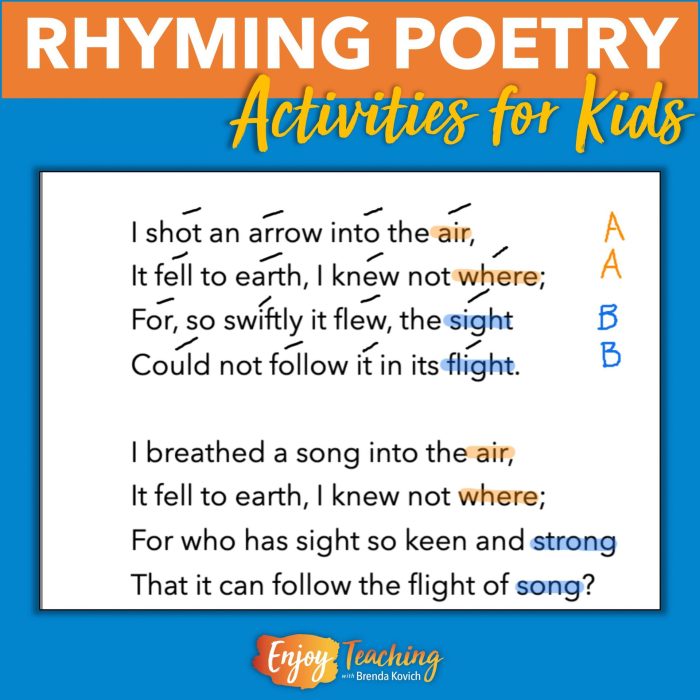
In conclusion, our exploration of example of rhythm in poetry has illuminated the profound influence of rhythmic patterns on the artistic expression of poets. We have traversed the intricacies of poetic form, examining how rhythm is intrinsically linked to structure, and how these elements work together to create a powerful and lasting impact on the reader. The examples showcased reveal how poets utilize rhythm to shape mood, convey meaning, and ultimately, to connect with the reader on a deeply personal level.
This presentation offers a glimpse into the artistry and craft behind poetry, emphasizing the significant role of rhythm in creating engaging and thought-provoking literary works.
FAQ Overview
How does rhythm differ from rhyme?
While both rhythm and rhyme contribute to the musicality of poetry, rhythm focuses on the patterned recurrence of stressed and unstressed syllables, creating a sense of flow and beat. Rhyme, on the other hand, involves the repetition of similar sounds at the end of lines, creating a more immediate auditory effect.
What are some common rhythmic devices in poetry?
Common rhythmic devices include iambs (unstressed-stressed), trochees (stressed-unstressed), spondees (stressed-stressed), anapests (unstressed-unstressed-stressed), and dactyls (stressed-unstressed-unstressed). Each device creates a unique rhythmic effect, contributing to the overall musicality of the poem.
How does rhythm influence the meaning of a poem?
Rhythm can significantly influence the reader’s interpretation of a poem’s theme and message. The pacing and flow of a poem, determined by rhythmic patterns, can highlight specific lines, create emphasis, and evoke particular emotions. The poet’s manipulation of rhythm can subtly guide the reader toward a deeper understanding of the poem’s central idea.


