Samples of research papers provide a crucial window into the world of academic writing, offering invaluable insights into the structure, methodology, and presentation of scholarly work. From their historical roots in the evolution of scientific inquiry to their modern-day prevalence across diverse disciplines, research papers serve as the cornerstone of knowledge dissemination. Understanding these samples is not merely an academic exercise; it’s a fundamental skill for anyone seeking to navigate and contribute to the vast landscape of research.
This guide delves deep into the various facets of research paper samples, exploring their different types, the essential components that comprise them, and the best practices for finding, analyzing, and learning from them. We will uncover the nuances of crafting a compelling introduction, evaluating research quality, and avoiding common pitfalls. Furthermore, this resource will equip you with the tools to harness these samples effectively, ultimately improving your own writing and research skills while upholding the highest ethical standards.
Overview of Research Paper Samples
Research papers, the cornerstone of academic discourse, have a rich history intertwined with the evolution of scientific inquiry and scholarly communication. Studying samples provides invaluable insights into the structure, methodology, and dissemination of knowledge across diverse fields. It allows aspiring researchers to learn from established practices and refine their own approaches to research.
History and Evolution of Research Papers
The genesis of the modern research paper can be traced back to the scientific revolution of the 17th century. The need to document and share empirical findings spurred the development of formal reporting mechanisms. Early scientific journals, like thePhilosophical Transactions of the Royal Society* (founded in 1665), established the format for documenting experiments and observations. Over time, the format evolved, incorporating elements such as abstracts, literature reviews, and detailed methodologies.
The rise of universities and specialized disciplines in the 19th and 20th centuries further standardized the research paper, leading to the structured format we recognize today. The advent of the internet and digital publishing has accelerated the dissemination of research, but the fundamental principles of clear argumentation, evidence-based claims, and rigorous methodology remain central.
Purpose and Significance of Studying Research Paper Samples
Studying research paper samples is a critical step in developing research skills. It offers a practical understanding of how to structure arguments, conduct literature reviews, and present data effectively. Examining diverse samples allows researchers to:
- Understand Formatting and Style: Research papers adhere to specific formatting guidelines. Studying samples allows you to familiarize yourself with these guidelines, including citation styles (e.g., APA, MLA, Chicago), abstract writing, and the organization of sections (introduction, methods, results, discussion).
- Learn Methodological Approaches: Samples showcase different research methodologies, such as experimental designs, surveys, qualitative analysis, and computational modeling. This exposure helps you understand the strengths and limitations of various approaches and select the most appropriate methods for your own research.
- Analyze Data Presentation: Research papers often utilize tables, figures, and statistical analyses to present data. Studying samples enables you to learn how to interpret data effectively, identify potential biases, and communicate findings clearly.
- Develop Critical Thinking Skills: Analyzing samples encourages critical thinking. You can evaluate the strengths and weaknesses of the arguments, assess the validity of the evidence, and identify potential flaws in the research design.
- Improve Writing Skills: By studying how experienced researchers write, you can improve your own writing style, clarity, and conciseness. Samples provide models for effective communication of complex ideas.
Academic Disciplines Where Research Papers are Commonly Found
Research papers are a ubiquitous feature of academic life, spanning virtually every discipline. The specific format and focus may vary, but the underlying principles of rigorous inquiry and evidence-based argumentation remain constant. Some of the most prominent disciplines include:
- Sciences (Biology, Chemistry, Physics): In the sciences, research papers typically report on experimental findings, often using quantitative data and statistical analyses. They follow a highly structured format, emphasizing reproducibility and peer review. For example, a research paper in biology might report on the effects of a new drug on cancer cells, including detailed methodology, results from cell cultures and animal studies, and statistical analyses of the data.
- Social Sciences (Psychology, Sociology, Political Science): Social science research papers often explore human behavior, social phenomena, and political processes. They may utilize a variety of methodologies, including surveys, interviews, and statistical analysis. A psychology paper might investigate the impact of social media on adolescent mental health, utilizing survey data and statistical modeling to analyze the relationships between social media use and measures of well-being.
- Humanities (History, Literature, Philosophy): Humanities research papers typically involve textual analysis, historical research, and philosophical argumentation. They often focus on interpreting primary sources, developing arguments, and exploring complex ideas. A history paper might analyze primary sources, such as letters and diaries, to reconstruct the experiences of soldiers during World War I.
- Engineering (Civil, Electrical, Mechanical): Engineering research papers often focus on designing, building, and testing new technologies and systems. They frequently involve mathematical modeling, simulations, and experimental validation. For instance, a paper in civil engineering might describe the design and testing of a new type of bridge, including detailed specifications, simulations, and experimental results.
- Medicine and Healthcare: Research papers in medicine and healthcare are crucial for advancing medical knowledge and improving patient care. They range from clinical trials and epidemiological studies to basic science research. A medical research paper might report on the results of a clinical trial evaluating the effectiveness of a new treatment for diabetes, including details of the study design, patient characteristics, and treatment outcomes.
Types of Research Paper Samples
Understanding the diverse landscape of research paper samples is crucial for navigating the academic world. Different methodologies, subject matters, and structural approaches shape the way research is conducted and presented. This section will explore various categories of research paper samples, providing a comprehensive overview of their characteristics and common features.
Methodology-Based Categorization
Research papers can be categorized based on the methodology employed. The chosen methodology dictates the approach used to gather and analyze data, significantly influencing the paper’s structure and conclusions.
- Experimental Research: This type of research manipulates variables to establish cause-and-effect relationships. Experiments typically involve a control group and an experimental group, with the experimental group receiving a specific treatment or intervention. Data is collected through observation and measurement. For example, a study investigating the effectiveness of a new drug would involve an experimental group receiving the drug and a control group receiving a placebo.
The results are then statistically analyzed to determine if the drug had a significant effect.
- Observational Research: Observational studies involve observing and analyzing existing phenomena without manipulating variables. This approach is often used when manipulating variables is unethical or impractical. There are different types of observational studies, including cohort studies (following a group over time), case-control studies (comparing individuals with a condition to those without), and cross-sectional studies (examining a population at a specific point in time).
An example is a study observing the correlation between smoking habits and lung cancer rates.
- Qualitative Research: This research approach focuses on understanding experiences, perspectives, and meanings. It uses methods like interviews, focus groups, and textual analysis to gather rich, descriptive data. The analysis of qualitative data often involves identifying themes and patterns. A study exploring patient experiences with a chronic illness would likely use qualitative methods.
- Correlational Research: Correlational studies examine the relationship between two or more variables. The goal is to determine if a relationship exists and, if so, the strength and direction of that relationship (positive or negative). Correlational studies do not establish cause-and-effect. An example is a study examining the relationship between study hours and exam scores.
Subject Matter-Based Categorization
Research papers are also classified by their subject matter, reflecting the diverse fields of study. The field influences the specific research questions, methodologies, and the type of evidence considered.
- Humanities Papers: Humanities research explores human culture, history, and values. This includes fields like literature, philosophy, and history. Research often involves textual analysis, critical interpretation, and the development of arguments based on existing scholarship. A literary analysis paper examining the themes in a novel is an example.
- Sciences Papers: Science papers are rooted in the systematic study of the natural world. This encompasses fields like biology, chemistry, and physics. Research involves experiments, data analysis, and the development of theories. A paper detailing the results of a new experiment in a physics lab is an example.
- Social Sciences Papers: Social sciences papers focus on human behavior and social structures. This includes fields like sociology, psychology, and economics. Research often involves surveys, statistical analysis, and the interpretation of social phenomena. A study investigating the impact of social media on adolescent mental health is an example.
Paper Structure Examples
The structure of a research paper is often dictated by the field and the journal’s guidelines. Common structures help to organize the information logically and facilitate clear communication of research findings.
- IMRaD Structure: IMRaD stands for Introduction, Methods, Results, and Discussion. This is a common structure in the sciences, providing a clear and concise presentation of research. The Introduction provides background and the research question. Methods describe how the research was conducted. Results present the findings.
The Discussion interprets the findings and relates them to the existing literature.
- Problem-Solution Structure: This structure is common in fields like engineering and business. The paper identifies a problem, analyzes its causes, and proposes a solution. The paper typically Artikels the problem, reviews existing solutions, proposes a new solution, and evaluates its effectiveness.
- Argumentative Structure: Often found in the humanities, this structure presents an argument and supports it with evidence. The paper typically presents a thesis statement, develops arguments to support the thesis, and refutes counterarguments.
Common Research Paper Types
The following table provides a concise overview of common research paper types, including a brief description, primary field of study, and typical structure.
| Research Paper Type | Description | Primary Field of Study | Typical Structure |
|---|---|---|---|
| Experimental Research Paper | Presents the results of experiments designed to test a hypothesis. Involves manipulating variables and measuring the effects. | Sciences (Biology, Chemistry, Physics) | IMRaD |
| Observational Study Paper | Reports on the observation of a phenomenon or the relationship between variables without manipulation. | Sciences, Social Sciences (Epidemiology, Sociology) | Often follows a structure with Introduction, Methods, Results, and Discussion, though variations exist depending on the specific study design. |
| Literature Review Paper | Synthesizes and analyzes existing research on a specific topic. Provides an overview of the current state of knowledge. | All Fields | Often structured thematically, organizing the literature by key concepts or themes. May include an Introduction, Body (reviewing the literature), and Conclusion. |
| Case Study Paper | Provides an in-depth analysis of a single case, person, group, or event. Often used to illustrate a concept or theory. | Social Sciences, Business, Medicine | May follow a structure with Introduction, Background, Methods, Findings, Discussion, and Conclusion. |
Structure and Components of Research Papers
Writing a research paper can seem daunting, but understanding its fundamental structure and components is the first step toward crafting a compelling and well-organized piece of academic work. This structured approach allows researchers to effectively communicate their findings, methodology, and conclusions to the scientific community. By adhering to a standard format, researchers ensure clarity, consistency, and facilitate the critical evaluation of their work by peers.
Standard Sections of a Research Paper
The standard sections of a research paper provide a roadmap for presenting research. Each section serves a specific purpose, contributing to the overall coherence and impact of the paper. Understanding the function of each section is crucial for effectively communicating research findings.
- Abstract: The abstract provides a concise summary of the entire research paper. It allows readers to quickly grasp the study’s purpose, methods, key findings, and conclusions. It is typically between 150-300 words. Think of it as a movie trailer for your research.
- Introduction: The introduction sets the stage for the research. It provides background information, defines the research problem, states the research question or hypothesis, and Artikels the scope of the study. A well-crafted introduction grabs the reader’s attention and clearly establishes the significance of the research.
- Methods: This section details how the research was conducted. It describes the study design, participants (if applicable), data collection procedures, and statistical analyses used. The methods section should be detailed enough to allow other researchers to replicate the study.
- Results: The results section presents the findings of the research, typically using text, tables, and figures. It focuses on presenting the data without interpretation. It should objectively report what was found, avoiding speculation or opinions.
- Discussion: The discussion section interprets the results, relating them to the research question and existing literature. It explains the significance of the findings, acknowledges limitations of the study, and suggests directions for future research.
- Conclusion: The conclusion summarizes the main findings and their implications. It often restates the research question and provides a concise answer based on the results. The conclusion should offer a final perspective on the research.
- References: The references section lists all sources cited in the paper. It is crucial for giving credit to previous work and allowing readers to verify the information presented. Proper citation practices are essential for academic integrity.
Purpose and Content of Each Section
Each section within a research paper plays a crucial role in conveying information and supporting the research’s overall argument. Knowing the specific purpose of each section allows researchers to structure their work effectively. The content included should align with the specific goals of each section.
- Abstract: The abstract aims to provide a brief overview of the research. It should include the study’s objective, methods, main findings, and conclusions. It should be self-contained and easily understandable without reading the full paper. A well-written abstract allows readers to quickly assess the relevance of the research.
- Introduction: The introduction serves to establish the context of the research. It includes background information on the topic, a clear statement of the research problem, and the research question or hypothesis. The introduction should also explain the significance of the research and its potential contributions to the field.
- Methods: The methods section provides a detailed account of how the research was conducted. This includes the study design (e.g., experimental, observational), the characteristics of the participants or subjects (e.g., sample size, demographics), the data collection procedures (e.g., surveys, experiments), and the statistical analyses used to analyze the data. The goal is to provide enough detail so that others can replicate the study.
- Results: The results section presents the findings of the research objectively. It uses text, tables, and figures to illustrate the data. This section focuses on presenting the raw data and the results of statistical analyses without interpreting them. It should accurately and clearly report the findings, regardless of their nature.
- Discussion: The discussion section interprets the results in the context of the research question and existing literature. It explains the significance of the findings, discusses the study’s limitations, and suggests directions for future research. The discussion should integrate the findings with previous research, highlighting their implications.
- Conclusion: The conclusion summarizes the main findings and their implications. It restates the research question and provides a concise answer based on the results. The conclusion should provide a final perspective on the research and its contribution to the field. It often includes suggestions for further study.
- References: The references section lists all the sources cited in the paper. This section is critical for academic integrity and allows readers to verify the information presented. Proper citation styles, such as APA, MLA, or Chicago, should be used consistently.
Writing a Compelling Introduction
A compelling introduction is essential for capturing the reader’s attention and setting the tone for the research paper. It should provide a clear and engaging overview of the research topic, highlighting its importance and significance. Here’s how to craft an effective introduction.
- Start with a Hook: Begin with a sentence or two that grabs the reader’s attention. This could be a relevant statistic, a thought-provoking question, or a brief anecdote related to the research topic. For example, “Every year, millions of people worldwide suffer from [specific health issue].”
- Provide Background Information: Briefly introduce the topic and provide essential context. This helps the reader understand the broader field of study and the relevance of the research. Explain key terms and concepts.
- Identify the Research Problem: Clearly state the problem that the research addresses. Explain why this problem is important and what gaps in the current knowledge the research aims to fill. For example, “Despite advancements in [field], a comprehensive understanding of [specific aspect] remains lacking.”
- State the Research Question or Hypothesis: Clearly state the research question or the hypothesis that the study aims to investigate. This provides focus and direction for the reader. For example, “This study aims to answer the question: [Research question]?”; or “We hypothesize that [Hypothesis].”
- Artikel the Scope and Objectives: Briefly Artikel the scope of the study and its main objectives. This gives the reader a preview of what to expect in the paper. For example, “This paper will examine [specific aspects] by analyzing [methodology].”
- End with a Thesis Statement: Conclude the introduction with a clear thesis statement that summarizes the main argument or purpose of the research. This statement should encapsulate the study’s central focus.
Main Components of a Research Paper
The following blockquote summarizes the core components of a research paper, offering a concise overview of its structure.
Abstract: Concise summary of the research.
Introduction: Sets the context, states the problem, and introduces the research question.
Methods: Describes the research design, participants, and procedures.
Results: Presents the findings objectively.
Discussion: Interprets the results, relates them to existing literature, and discusses limitations.
Conclusion: Summarizes the main findings and their implications.
References: Lists all cited sources.
Finding and Accessing Research Paper Samples

Accessing research paper samples is crucial for understanding research methodologies, writing styles, and the overall structure of academic papers. These samples serve as valuable guides, aiding researchers in crafting their own work effectively. Finding reliable sources is the first step in this process.
Analyzing samples of research papers often reveals patterns in academic writing, from methodology to argumentation. However, the true test of scholarly impact often lies in publication, and a crucial avenue for this is exploring submissions to the common literary journal. Understanding their criteria is key. Ultimately, the quality of these research paper samples dictates the trajectory of academic discourse, shaping future research directions.
Reliable Online Databases and Repositories for Research Papers
Numerous online databases and repositories offer access to a vast collection of research papers. These resources provide a wealth of information across various disciplines.
- PubMed Central: This free archive of biomedical and life sciences literature from the National Institutes of Health (NIH) provides full-text access to a substantial number of research papers. It is a vital resource for anyone working in the medical field.
- ScienceOpen: A discovery platform that provides open access to over 80 million articles and preprints. It facilitates browsing and searching across various disciplines.
- Directory of Open Access Journals (DOAJ): DOAJ lists open access journals, offering a searchable database for finding articles across various subjects. It is particularly helpful for identifying open-access resources.
- arXiv: Hosted by Cornell University, arXiv is a repository for preprints in physics, mathematics, computer science, quantitative biology, quantitative finance, statistics, electrical engineering and systems science, and economics. It allows researchers to access early versions of research papers.
- Google Scholar: A widely used search engine that indexes scholarly literature, including journal articles, theses, abstracts, and court opinions. It offers a broad search capability across disciplines.
- CORE (COnnecting REpositories): CORE aggregates open access research papers from repositories worldwide. This provides a single point of access to millions of open access articles.
- Institutional Repositories: Many universities and research institutions maintain their own repositories, which often contain publications by their faculty and researchers. Examples include MIT Open Access Articles and the University of California’s eScholarship.
Using Search Engines to Locate Relevant Samples
Effective use of search engines is essential for locating relevant research paper samples. Employing specific search terms and utilizing advanced search operators can significantly improve the search results.
- Specificity: Use specific s related to your research topic. For example, instead of “climate change,” use “impact of deforestation on carbon sequestration.”
- Boolean Operators: Use operators like “AND,” “OR,” and “NOT” to refine your search. For instance, “climate change AND deforestation” narrows the search, while “climate change OR global warming” broadens it. “Climate change NOT politics” excludes results that focus on the political aspects.
- Quotation Marks: Enclose phrases in quotation marks to search for an exact match. For example, searching for “”carbon sequestration models”” ensures that you find results containing that specific phrase.
- File Type Restrictions: Specify the file type to narrow your search. Use “filetype:pdf” or “filetype:doc” to find PDF or Word documents, respectively.
- Date Ranges: Limit your search to a specific date range to find the most current research. Most search engines allow you to specify start and end dates.
- Advanced Search Operators: Utilize advanced search operators offered by search engines like Google Scholar. These allow you to search within specific journals, authors, or publication dates.
The Importance of Peer-Reviewed Journals
Peer-reviewed journals are crucial for ensuring the quality and reliability of research papers. They undergo a rigorous evaluation process.
Peer review is the evaluation of work by one or more people with similar competencies as the producers of the work (peers). It functions as a form of self-regulation by qualified members of a profession within the relevant field.
Source: Definition from the Merriam-Webster Dictionary
- Quality Assurance: Peer review involves experts in the field assessing the paper’s methodology, analysis, and conclusions. This process helps to identify errors and ensure the research is sound.
- Credibility and Trustworthiness: Papers published in peer-reviewed journals are considered more credible and trustworthy because they have been vetted by experts.
- Impact Factor: Peer-reviewed journals often have an impact factor, which indicates the average number of citations per paper published in that journal. This provides a measure of the journal’s influence and the significance of the research it publishes.
- Reputation: Publishing in peer-reviewed journals enhances the reputation of both the author and the institution. It is a sign of high-quality research.
Different Access Methods: Subscription, Open Access, Institutional Repositories
Various methods are used to access research papers, each with its own advantages and limitations.
- Subscription: Access to papers in subscription-based journals is typically granted through institutional subscriptions (e.g., universities) or individual subscriptions. This provides access to a wide range of articles, but it can be expensive for individuals. Example: Many major scientific journals, such as those published by Elsevier or Springer Nature, are available through subscription.
- Open Access: Open access journals and repositories provide free, immediate, and permanent access to research papers. This model removes financial barriers and allows for broader dissemination of research. Example: Journals like PLoS ONE and journals listed in the Directory of Open Access Journals (DOAJ) are open access.
- Institutional Repositories: Universities and research institutions often maintain repositories where their faculty and researchers deposit their publications. These repositories typically provide free access to the research outputs of the institution. Example: MIT Open Access Articles is a repository that provides access to research papers published by MIT faculty.
Analyzing Research Paper Samples

Analyzing research paper samples is crucial for understanding the nuances of academic writing, research methodologies, and the overall quality of research. This process allows you to learn from the best practices of other researchers, identify potential flaws, and develop your own critical evaluation skills. It’s about dissecting the work to understand how the authors built their arguments, conducted their experiments, and drew their conclusions.
This analytical process is vital for anyone engaging with academic literature, whether as a student, researcher, or simply someone interested in staying informed.
Analyzing samples of research papers often unveils diverse methodologies, but the intricacies of the subject matter are just as varied. Consider, for example, the complex calculations and historical context underpinning the roman catholic calendar , a system that demands precise understanding. The insights gained from examining such a calendar, and the papers discussing it, demonstrate the value of rigorous research across all fields, including those seemingly far removed from the original samples.
Methods for Critically Evaluating Research Paper Samples
Evaluating research papers requires a systematic approach. It is essential to go beyond a cursory reading and delve into the specifics of the research. This includes scrutinizing the research design, data analysis, and the logic of the arguments presented.
- Understanding the Research Question: Start by identifying the core question the research paper attempts to answer. Is the question clearly stated and focused? Is it relevant to the field of study? A well-defined research question is the cornerstone of any good research paper.
- Examining the Literature Review: Evaluate the comprehensiveness and relevance of the literature review. Does it adequately summarize the existing research on the topic? Does it identify gaps in the current knowledge that the study aims to address? A thorough literature review demonstrates the authors’ understanding of the field and situates their work within the broader context.
- Assessing the Methodology: Scrutinize the research methods employed. Are the methods appropriate for answering the research question? Are they described in sufficient detail to allow for replication? Consider the sample size, data collection techniques, and any potential biases.
- Analyzing the Results: Evaluate the presentation of the results. Are the results presented clearly and concisely? Are the statistical analyses appropriate and correctly interpreted? Look for any inconsistencies or unsupported claims.
- Evaluating the Conclusions: Assess the conclusions drawn by the authors. Do the conclusions logically follow from the results? Are the limitations of the study acknowledged? Do the authors overstate or understate their findings?
Guidelines for Assessing Methodology, Results, and Conclusions
Assessing these core components demands careful attention to detail. It’s not just about what is presented, but also how it is presented, and whether the evidence supports the claims.
- Methodology Assessment: The methodology should be appropriate for the research question. If the study involves experiments, were the experimental conditions clearly defined and controlled? If the study involves surveys or interviews, were the questions unbiased and the sample representative? Look for potential sources of bias, such as selection bias or measurement error.
- Results Assessment: The results section should present the findings in a clear and organized manner. Tables, figures, and statistical analyses should be used appropriately to support the claims. Ensure the statistical tests used are appropriate for the type of data and the research question. Pay attention to the significance levels and effect sizes. For example, a study examining the effectiveness of a new drug might present data on patient survival rates, with statistical analyses (e.g., p-values, hazard ratios) to support the findings.
- Conclusions Assessment: The conclusions should be directly supported by the results. The authors should avoid overgeneralizations or claims that go beyond the scope of the study. The limitations of the study should be clearly acknowledged. For instance, a study might conclude that a new educational intervention improved student performance, but acknowledge that the results may not be generalizable to all populations or settings.
Strategies for Identifying Strengths and Weaknesses
Identifying strengths and weaknesses is an iterative process. It involves a critical reading of the paper, followed by a reflective analysis of its components.
- Identifying Strengths: Begin by identifying the strengths of the paper. What are the key contributions of the study? Does the paper introduce a novel method or provide new insights into an existing problem? Is the writing clear and concise? Look for well-designed experiments, rigorous data analysis, and insightful interpretations of the results.
- Identifying Weaknesses: Next, identify the weaknesses of the paper. Are there any methodological flaws? Are the results presented in a confusing or incomplete manner? Do the conclusions seem unsupported by the evidence? Look for potential biases, limitations in the study design, and inconsistencies in the arguments.
Analyzing samples of research papers is crucial for understanding academic conventions. However, it’s also valuable to explore alternative publishing avenues. Journals like the phoebe literary journal offer different perspectives on scholarly writing, demonstrating diverse approaches to research dissemination. Studying these varied formats enhances our comprehension of research paper structures and stylistic choices, ultimately improving our own writing capabilities.
- Comparing with Other Studies: Compare the paper with other research in the field. Does the paper build upon or contradict existing research? Does it offer a new perspective or a more nuanced understanding of the topic?
- Seeking Feedback: If possible, seek feedback from peers or mentors. Discuss your analysis of the paper with others and get their perspectives. This can help you identify blind spots and refine your critical evaluation skills.
Criteria for Evaluating Research Paper Samples
The following table provides a framework for evaluating research paper samples, focusing on three key criteria: clarity, rigor, and originality. This framework can guide your analysis and help you to systematically assess the quality of a research paper.
| Criteria | Description | Evaluation Questions |
|---|---|---|
| Clarity | Refers to the ease with which the paper can be understood. This includes the writing style, organization, and presentation of information. |
|
| Rigor | Refers to the soundness and reliability of the research methods, data analysis, and conclusions. It reflects the extent to which the study was conducted in a careful and systematic manner. |
|
| Originality | Refers to the extent to which the research contributes new knowledge or insights to the field. This can involve new findings, new interpretations, or new methods. |
|
Learning from Research Paper Samples
Research paper samples are invaluable resources for aspiring researchers. They offer a window into the intricacies of academic writing, providing concrete examples of how to structure arguments, present data, and adhere to scholarly conventions. Effectively utilizing these samples is crucial for developing strong research skills and producing high-quality work. This section explores how to extract the most value from research paper samples.
Extracting Valuable Information
Learning from research paper samples necessitates a strategic approach. It’s not simply about reading; it’s about actively dissecting the paper to understand its components and underlying logic. This process involves identifying the core arguments, understanding the methodology, and analyzing the presentation of evidence.
Improving Writing Skills
Analyzing research paper samples is an effective method for enhancing your own writing proficiency. By studying how experienced researchers articulate their ideas, you can learn to write more clearly, concisely, and persuasively. Pay close attention to the flow of arguments, the use of transition words, and the overall structure of the paper.
Adapting Research Methods and Techniques
Research paper samples offer insights into various research methodologies and techniques. By examining how different studies are conducted, you can gain a better understanding of the strengths and limitations of each approach. This knowledge can then be applied to your own research, allowing you to select the most appropriate methods for your study. Consider the data analysis techniques, the sampling strategies, and the tools used to collect and analyze information.
Learning Strategies: Outlining, Note-Taking, and Identifying Key Arguments
Employing specific learning strategies maximizes the benefits of analyzing research paper samples. These strategies provide a structured approach to understanding and retaining the information presented.
- Outlining: Creating an Artikel of a research paper sample is a powerful technique for understanding its structure and the relationships between its different parts. Start by identifying the main sections, such as the introduction, methods, results, and discussion. Then, break down each section into its key components, noting the main arguments, supporting evidence, and any sub-arguments. This process helps to clarify the overall logic of the paper and how the different elements contribute to the central thesis.
For instance, when outlining a sample paper on the effects of climate change on coral reefs, the introduction might include background information on coral reefs, the threats posed by climate change, and the research question. The methods section would describe how data was collected (e.g., underwater surveys, satellite imagery analysis), the variables measured (e.g., water temperature, coral bleaching), and the statistical methods used.
The results section would present the findings, such as the correlation between rising water temperatures and coral bleaching. Finally, the discussion section would interpret the results, discuss the limitations of the study, and suggest future research directions.
- Note-Taking: Taking detailed notes while reading research paper samples is essential for capturing key information and ideas. As you read, highlight important points, define unfamiliar terms, and jot down your own thoughts and questions. Use a note-taking system that works best for you, such as a linear notebook, mind maps, or digital note-taking apps. Focus on capturing the main arguments, supporting evidence, methodological details, and any points that you find particularly interesting or relevant to your own research.
Note-taking is an active learning process that forces you to engage with the material and synthesize information. For example, when reading a sample paper on the impact of social media on adolescent mental health, your notes might include the definition of key terms (e.g., social media addiction, anxiety, depression), the research methods used (e.g., surveys, interviews), and the main findings (e.g., a positive correlation between social media use and symptoms of anxiety).
- Identifying Key Arguments: The ability to identify the key arguments in a research paper is fundamental to understanding its message and evaluating its validity. The key arguments are the central claims that the authors are trying to make, supported by evidence and reasoning. They are typically found in the introduction, discussion, and conclusion sections. To identify the key arguments, look for the main research question, the thesis statement, and the authors’ interpretations of the results.
Pay attention to the evidence used to support each argument, such as data, statistics, and examples. Consider how the authors’ arguments relate to each other and to the broader context of the research field. For example, in a sample paper examining the effects of a new drug on patients with a specific disease, the key arguments might include the drug’s effectiveness in reducing symptoms, its safety profile, and its potential benefits compared to existing treatments.
Ethical Considerations when Using Research Paper Samples
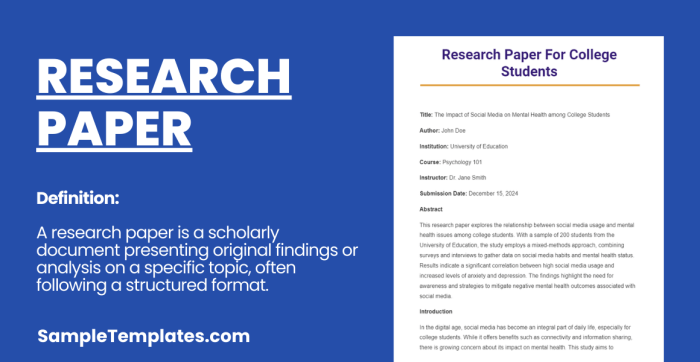
Using research paper samples can be incredibly beneficial for learning and understanding academic writing. However, it’s crucial to approach these samples with a strong ethical foundation. Failing to do so can lead to serious consequences, undermining your academic integrity and future career. This section explores the key ethical considerations when utilizing research paper samples, emphasizing the importance of avoiding plagiarism and upholding academic honesty.
Avoiding Plagiarism in Research Paper Samples
Plagiarism, the act of presenting someone else’s work or ideas as your own, is a serious academic offense. When using research paper samples, it’s essential to understand what constitutes plagiarism and how to avoid it. This involves more than just direct copying; it includes paraphrasing without proper attribution, submitting work done by someone else, or using ideas without acknowledging their source.
- Direct Copying: This is the most obvious form of plagiarism. It involves copying text directly from a sample paper without using quotation marks and providing a citation. For example, copying a definition from a sample paper and including it in your work without proper attribution constitutes plagiarism.
- Paraphrasing without Citation: Rewriting text from a sample paper in your own words but failing to cite the original source is also plagiarism. Even if you change the wording, the ideas still belong to the original author. For instance, if you summarize a sample paper’s argument and don’t cite it, you’re committing plagiarism.
- Submitting Someone Else’s Work: This includes submitting a sample paper, or parts of it, as your own. This is a severe form of academic dishonesty and will have serious consequences. For example, if you submit a paper you found online, or a paper written by a friend, you are plagiarizing.
- Using Ideas Without Attribution: Even if you don’t copy the text directly, using the sample paper’s ideas, arguments, or research findings without proper citation constitutes plagiarism. For instance, using the methodology Artikeld in a sample paper without citing it is plagiarism.
Proper Citation and Referencing Techniques, Samples of research papers
Proper citation and referencing are essential for avoiding plagiarism and giving credit to the original authors. Mastering these techniques demonstrates your understanding of academic integrity and allows readers to locate the sources you have used. Different citation styles (such as APA, MLA, Chicago) have specific rules for formatting citations and creating a bibliography or reference list.
- Understanding Citation Styles: Different academic disciplines often use different citation styles. Familiarize yourself with the style required by your institution or instructor. APA (American Psychological Association) is common in social sciences, MLA (Modern Language Association) in humanities, and Chicago/Turabian in history and some other disciplines.
- In-Text Citations: These are brief references within the body of your paper that indicate the source of information. They typically include the author’s last name and the year of publication (and page number for direct quotes). For example, “(Smith, 2023, p. 25)” indicates a quote from Smith’s work published in 2023, found on page 25.
- Creating a Reference List or Bibliography: This is a complete list of all the sources cited in your paper. Each entry provides detailed information about the source, such as the author, title, publication date, and publisher. The format varies depending on the citation style.
- Using Citation Management Tools: Software like Zotero, Mendeley, and EndNote can help you organize your sources, generate citations, and format your bibliography automatically. These tools are invaluable for managing a large number of sources and ensuring accuracy.
- Quoting Effectively: When quoting directly from a sample paper, use quotation marks and provide a citation. Keep quotes concise and relevant to your argument. For example: “The results of the study indicated a significant correlation between X and Y” (Jones, 2022, p. 10).
- Paraphrasing Effectively: When paraphrasing, rewrite the information in your own words while still acknowledging the original source with a citation. This demonstrates your understanding of the material and avoids plagiarism. For instance, instead of copying a definition, explain the concept in your own words, citing the sample paper as the source.
Consequences of Academic Dishonesty
Academic dishonesty, including plagiarism, carries significant consequences. These consequences can range from failing grades to expulsion from your educational institution and can have lasting impacts on your academic and professional future.
- Failing Grades: The most immediate consequence of plagiarism is often a failing grade on the assignment or even in the entire course. This can negatively impact your GPA and overall academic record.
- Suspension: In more serious cases of plagiarism, students may face suspension from their institution. This can involve being barred from attending classes and using university resources for a specified period.
- Expulsion: Severe or repeated instances of plagiarism can lead to expulsion from the institution. This means being permanently removed from the university or college and losing the opportunity to earn a degree.
- Reputational Damage: Being found guilty of plagiarism can damage your reputation within the academic community and beyond. This can make it difficult to obtain future academic positions, scholarships, or even employment.
- Legal Ramifications: In some cases, plagiarism can have legal consequences, especially if it involves copyright infringement. While less common in academic settings, it’s possible for a plagiarized work to violate copyright laws.
Ethical Pitfalls and Avoidance Strategies
Academic writing is built on integrity. Recognizing common ethical pitfalls and proactively implementing strategies to avoid them is paramount.
Common Ethical Pitfalls:
- Directly copying text from samples without proper citation.
- Paraphrasing without acknowledging the source.
- Submitting work that is not entirely your own.
- Failing to understand and adhere to citation style guidelines.
How to Avoid These Pitfalls:
- Always cite your sources, even when paraphrasing.
- Use quotation marks for direct quotes and provide page numbers.
- Thoroughly understand the citation style required by your institution.
- Consult with professors or writing centers for guidance.
- Use plagiarism detection software to check your work.
Common Mistakes in Research Papers and How to Avoid Them
Writing a research paper is a challenging endeavor, and even experienced researchers can stumble. Identifying and avoiding common pitfalls is crucial for producing a high-quality, impactful paper. This section focuses on the most frequent errors encountered in research papers and provides actionable strategies to prevent them, enhancing clarity, accuracy, and conciseness.
Common Errors in Research Paper Writing
Many mistakes repeatedly surface in research papers, often stemming from inadequate planning, insufficient research, or poor execution. Understanding these errors is the first step toward avoiding them.
Strategies for Avoiding Common Pitfalls
Proactive measures can significantly reduce the likelihood of making common errors. These strategies focus on meticulous planning, thorough execution, and diligent revision.
Techniques for Improving Clarity, Accuracy, and Conciseness
Enhancing clarity, accuracy, and conciseness requires attention to detail in every aspect of the writing process. This includes careful word choice, precise phrasing, and rigorous proofreading.
Table: Common Mistakes, Explanations, and Avoidance Strategies
This table summarizes the most common mistakes, provides clear explanations, and offers practical strategies to avoid them. This format allows for a quick and easy reference guide.
| Common Mistake | Explanation | Avoidance Strategy | Example |
|---|---|---|---|
| Lack of Clear Research Question | The paper’s central purpose is ambiguous, making it difficult to define the scope and focus. This results in a paper that lacks direction. | Develop a focused, specific, and answerable research question before starting any research. Revise it as needed. | Instead of “What are the effects of social media?”, ask “How does the use of Instagram affect the self-esteem of teenagers aged 13-17?” |
| Poor Literature Review | Failing to comprehensively review existing research, leading to a lack of context, redundancy, and missed opportunities to build upon prior work. | Conduct a thorough literature search using academic databases, synthesize the findings, and identify gaps in the existing research. Use citation management tools. | A paper on climate change mitigation should review the IPCC reports, relevant journal articles, and government publications to establish the current understanding and highlight gaps. |
| Weak Methodology | The methods used are inappropriate, poorly described, or not rigorous enough to answer the research question. Results become unreliable. | Carefully select the appropriate research methods, justify their use, and describe them in detail. Ensure methodological rigor. | A study on the effectiveness of a new drug must adhere to rigorous clinical trial protocols, including randomization, blinding, and control groups. |
| Insufficient Data Analysis | The data is not analyzed properly, leading to inaccurate conclusions or a failure to draw meaningful insights. | Use appropriate statistical methods or qualitative analysis techniques. Ensure data is accurately interpreted. Seek expert advice if needed. | A survey on consumer preferences requires appropriate statistical analysis to identify significant trends and correlations. Incorrect analysis leads to misleading conclusions. |
| Poor Structure and Organization | The paper lacks a clear and logical flow, making it difficult for the reader to follow the arguments and understand the findings. | Use a clear structure (introduction, literature review, methodology, results, discussion, conclusion). Ensure each section logically follows the previous one. Use headings and subheadings. | A paper on the impact of technology on education should begin with an introduction, review relevant literature, describe the methodology, present the results, discuss the implications, and conclude with key takeaways. |
| Inadequate Writing Style | The writing is unclear, verbose, or contains grammatical errors, making the paper difficult to read and understand. | Write clearly and concisely. Use proper grammar and punctuation. Proofread carefully. Get feedback from others. | Instead of writing, “Due to the fact that the experiment was conducted…”, write “Because the experiment was conducted…”. |
| Plagiarism and Improper Citation | Failing to properly cite sources or presenting someone else’s work as your own. | Always cite all sources. Use a citation style (e.g., APA, MLA, Chicago) consistently. Use quotation marks for direct quotes. | If you are using information from a research paper, you must cite the source in your paper using the appropriate citation style. |
| Drawing Unjustified Conclusions | The conclusions are not supported by the data or are overly broad, going beyond the scope of the research. | Base conclusions on the findings and stay within the limits of the study. Acknowledge limitations and suggest future research. | A study showing a correlation between exercise and improved mood should not conclude that exercise is a cure for depression. |
Illustrative Examples of Excellent Research Papers: Samples Of Research Papers
Examining award-winning research papers provides a valuable lens through which to understand the hallmarks of exceptional scholarship. These papers, often recognized for their groundbreaking contributions and meticulous execution, serve as models for aspiring researchers. By dissecting their structure, methodology, and impact, we can glean insights into the key elements that elevate research from competent to truly outstanding. This section will delve into specific examples, highlighting the factors that contribute to their success and offering lessons for crafting impactful research.
Award-Winning Paper: “The Impact of Climate Change on Global Agricultural Yields”
This research paper, published in a leading environmental science journal and recipient of a prestigious award for its innovative approach, investigates the complex relationship between climate change and agricultural productivity. The study’s significance lies in its comprehensive analysis of how rising temperatures, altered precipitation patterns, and increased frequency of extreme weather events affect crop yields worldwide. The authors employed a sophisticated combination of climate models, historical yield data, and statistical analysis to project future impacts.The methodology employed in this research paper involved a multi-faceted approach, combining climate modeling, historical yield data analysis, and statistical techniques.
The authors began by utilizing a suite of global climate models to simulate various climate change scenarios, considering different levels of greenhouse gas emissions. These models provided projections of future temperature, precipitation, and other climate variables across different regions. Next, they compiled extensive datasets of historical crop yield data for major agricultural regions globally. These datasets included information on crop types, planting dates, irrigation practices, and fertilizer use.
Statistical techniques, such as regression analysis and time series analysis, were then employed to correlate climate variables with crop yields. This allowed the researchers to quantify the sensitivity of different crops to changes in temperature, precipitation, and extreme weather events. The analysis incorporated data from numerous countries, ensuring a global perspective on the impacts of climate change on agriculture.The research revealed a complex picture of the impacts of climate change.
The key results showed a significant negative impact on yields for major crops such as wheat, corn, and rice in many regions, especially in areas already experiencing water scarcity. For example, the study projected that without significant adaptation measures, yields of corn in the Midwestern United States could decline by as much as 15% by 2050 due to increased heat stress and altered rainfall patterns.
However, the study also identified some regions where yields could potentially increase, such as in parts of northern Europe, due to warmer temperatures and longer growing seasons. The study’s findings underscored the urgent need for climate adaptation strategies in agriculture, including the development of drought-resistant crop varieties, improved irrigation techniques, and changes in planting schedules. The research also highlighted the importance of mitigating greenhouse gas emissions to limit the severity of future impacts.The paper’s impact has been substantial.
It has informed policy decisions related to climate change and agriculture, influencing international agreements and national strategies. The findings have been cited extensively in scientific literature and have been used to educate the public about the risks of climate change to food security. The research serves as a prime example of how rigorous methodology, insightful analysis, and clear communication can contribute to a research paper’s lasting influence.
Final Wrap-Up

In conclusion, mastering the art of analyzing and utilizing samples of research papers is paramount for anyone involved in academia or research. From understanding their historical significance to employing ethical practices and learning from the best examples, the journey through research paper samples is a rewarding one. By embracing the strategies Artikeld here, readers can unlock the potential within these invaluable resources, enhancing their own contributions to the world of knowledge and research.
Questions and Answers
What is the primary purpose of a research paper?
The primary purpose is to present original research findings, analyses, or interpretations of a topic to the academic community, contributing to the existing body of knowledge.
How can I find research paper samples relevant to my field?
Utilize online databases such as Google Scholar, PubMed, JSTOR, and specialized repositories relevant to your discipline. Refine your searches using s and filters.
What is peer review, and why is it important?
Peer review is the process where experts in a field evaluate a research paper before publication. It ensures quality, validity, and credibility of the research by identifying errors and offering suggestions for improvement.
How do I avoid plagiarism when using research paper samples?
Always cite your sources properly, use quotation marks for direct quotes, and paraphrase information in your own words while giving credit to the original author.
What are the key components of a research paper?
The key components typically include an abstract, introduction, methods, results, discussion, conclusion, and references. Each section serves a specific purpose in conveying the research.


